Forex Risk Management Techniques: How to Protect Your Capital
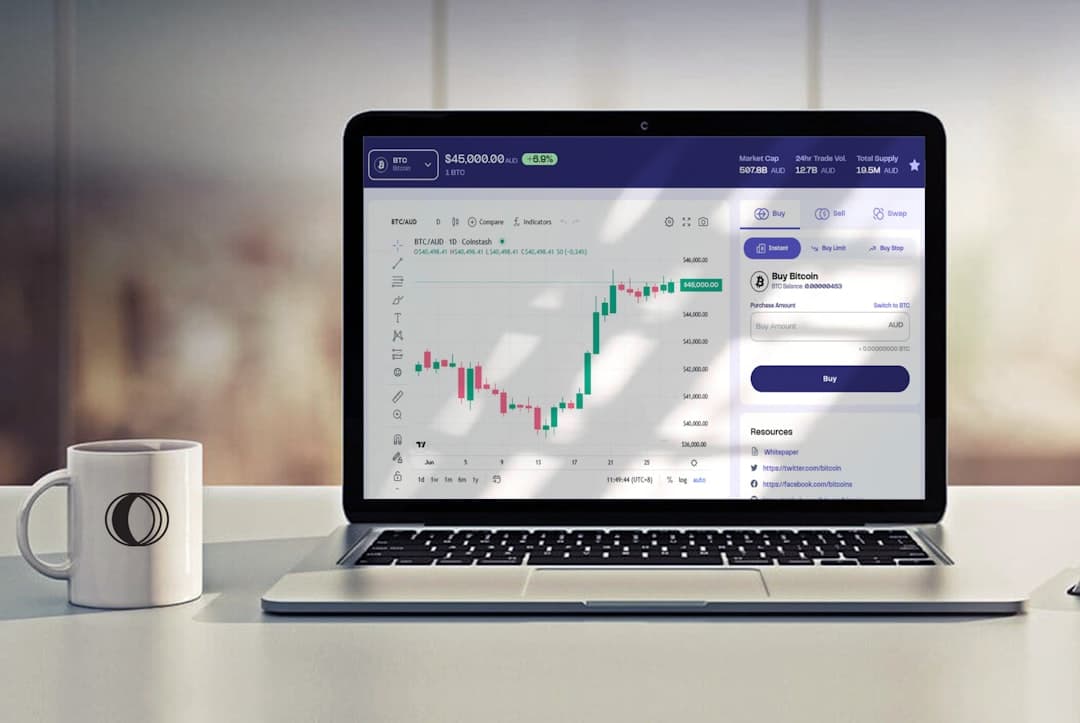
Why Risk Management is Non-Negotiable
In forex trading, you cannot control the market. You cannot control the news, the central banks, or the liquidity providers. The only thing you can control is your risk.
Risk management is the set of rules and measures you put in place to ensure that a losing streak does not wipe out your trading account. It is what separates professional traders from gamblers.
Core Principles of Risk Management
1. The 1% Rule
This is the golden rule of trading. Never risk more than 1% to 2% of your account balance on a single trade.
- Account Balance: $10,000
- Max Risk per Trade: $100 (1%)
This ensures that even if you lose 10 trades in a row, you still have nearly 90% of your capital left to fight another day. If you risk 10% per trade, a losing streak of 5 trades would deplete 50% of your account, which requires a 100% gain just to break even!
2. Stop-Loss Orders are Mandatory
A Stop-Loss (SL) is an order that automatically closes your trade if the price moves against you directly by a certain amount.
Never execute a trade without a predefined Stop-Loss.
- Mental stop-losses often fail due to emotional hesitation. "I'll close it if it goes lower" often turns into "It will bounce back soon," leading to catastrophic losses.
- Place your SL at a technical invalidation point (e.g., below a support level), not just an arbitrary number of pips.
3. Risk-to-Reward Ratio (R:R)
Your Reward (profit target) should always be larger than your Risk. A common benchmark is 1:2 or higher.
- Risk: $100
- Target: $200
With a 1:2 R:R, you can win only 40% of your trades and still be profitable.
- 10 Trades. 4 Wins ($200 * 4 = $800). 6 Losses ($100 * 6 = $600).
- Net Profit: $200.
The Cost of Poor Risk Management
Before we dive into techniques, let's understand the consequences of ignoring risk management.
The Gambler's Ruin
Mathematical reality: If you repeatedly risk 10% per trade, statistically you'll eventually lose everything. This isn't pessimism—it's probability.
Example of catastrophic risk:
- Start with $10,000
- Risk 10% per trade = $1,000
- Lose 5 consecutive trades
- Account: $10,000 → $9,000 → $8,100 → $7,290 → $6,561 → $5,905
- Lost 41% of account in 5 losses
- To recover: Need 70% gain just to get back to $10,000
Example with 1% risk:
- Start with $10,000
- Risk 1% per trade = $100
- Lose 5 consecutive trades ($500 total)
- Account: $9,500
- Lost only 5% —easily recoverable
The Drawdown Reality
Every trader experiences drawdowns (losing periods). The question is: Can you survive them?
- Poor risk management (5-10% per trade): Drawdowns of 30-50%+ are common, often account-destroying
- Professional risk management (1-2% per trade): Drawdowns rarely exceed 10%, survivable
Position Sizing in Depth
The Core Formula
Most traders know this formula but misapply it:
Max Loss per Trade ($) = Account Size × Risk %
Position Size = Max Loss / (Stop Loss Distance in Pips × Pip Value)
But the process involves multiple choices:
Step 1: Determine Your Account Size and Risk Percentage
Account Size: Your total trading capital (start with realistic numbers)
- Beginner: $1,000-$5,000
- Intermediate: $5,000-$25,000
- Advanced: $25,000+
Risk Percentage:
- Conservative: 0.5-1%
- Standard: 1-2%
- Aggressive: 2-3% (only for experienced traders)
Example: $10,000 account at 1% = $100 risk per trade
Step 2: Determine Your Stop Loss
This is the hard part—where do you logically place your stop?
Bad stop placement:
- 10 pips below entry (too tight, gets stopped out on noise)
- 100 pips below entry (too wide, loses too much)
Good stop placement:
- Just below support (if buying)
- Just above resistance (if selling)
- Beyond recent swing low (if buying)
- Based on your strategy's invalidation point
Example: EUR/USD support at 1.0800, so stop at 1.0795 = 5 pips? No. Stop placement: 1.0788 (20 pips) to avoid whipsaws at obvious levels.
Step 3: Calculate Position Size
Using the formula with realistic numbers:
Setup:
- Account: $10,000
- Risk: 1% = $100
- EUR/USD entry: 1.0850
- Stop loss: 1.0830 (20 pips)
- Pip value: $10 per pip (standard lot)
Position size = $100 / (20 pips × $10/pip) = $100 / $200 = 0.5 lots = 50,000 units
Verification: If stopped out at 1.0830: Loss = 20 pips × $10 × 50,000 units = $100 ✓
Advanced Risk Management Techniques
Break-Even Stops
Once a trade moves favorably by 1:1 ratio, move your stop to break-even.
Example:
- Entry: EUR/USD 1.0850
- Initial stop: 1.0820 (risk $100)
- Initial target: 1.0950 (profit $1,000)
- When price hits 1.0890 (40 pip profit, break-even distance):
- Move stop to 1.0851
- Now trade is risk-free
- Even if market reverses, you only lose commissions
Benefit: Psychological safety + locks profits
Scaling Out Strategy
Exit partially at set intervals to lock in gains:
Example:
- Position: 100,000 units EUR/USD
- Entry: 1.0850
- Initial target: 1.0950
Scaled exit:
- First 1/3 (33k units): Exit at 1.0900 (50 pip gain = $500)
- Second 1/3 (33k units): Exit at 1.0925 (75 pip gain = $750)
- Final 1/3 (34k units): Exit at 1.0950 if it gets there, or trail stop
Benefit:
- Lock in gains gradually
- Reduce emotionality (partial wins feel good)
- Let winners run while protecting profits
- Reduces overall risk if market turns
Correlation-Adjusted Sizing
If trading correlated pairs, size down:
Poor approach:
- Buy EUR/USD (2% risk)
- Buy GBP/USD (2% risk)
- Combined risk: 4% on USD weakness
- When USD strengthens: Both stop-outs possible
Smart approach:
- Buy EUR/USD (1% risk)
- Buy GBP/USD (0.5% risk)
- Combined correlated risk: ~1.5%
- More realistic total exposure
Correlation examples:
- EUR/USD + GBP/USD: High correlation (adjust sizing)
- EUR/USD + AUD/USD: Low correlation (can use full sizing each)
Daily Loss Limits
Set a maximum daily loss and stop trading when hit:
Example:
- Account: $10,000
- Daily loss limit: 2% = $200
Process:
- Trade 1: Win $150 (still below limit)
- Trade 2: Loss $100 (down $150 total, within limit)
- Trade 3: Loss $100 (down $250 total, EXCEEDS $200 limit)
- STOP TRADING FOR THE DAY
Benefit:
- Prevents revenge trading after losses
- Protects capital during emotional periods
- Resets psychology for next day
Emotional Risk Management
Risk management isn't just mathematical—it's psychological.
The Revenge Trading Trap
After a loss, the temptation is strong:
- "I need to make back that $500 quickly"
- Increase position size 2-3x
- Take marginal setups you'd normally skip
- Usually loses more money
Protection:
- Reduce position size 50% after daily loss limit hit
- Take a walk, clear your head
- Return tomorrow with fresh perspective
- Accept that losses happen; revenge doesn't help
Fear of Losses vs Fear of Missing Out
Two opposite emotions:
Fear of Losses:
- Exit winning trades early to lock profit in
- Miss 500 pips on a trade that gave 50
- Focus on avoiding losses more than capturing gains
Fear of Missing Out (FOMO):
- Chase prices that have already moved significantly
- Enter trades outside your strategy
- Risk more to make up for missed trades
Solution: Stick to your pre-planned stops and targets
Risk Metrics and Monitoring
Track these metrics to ensure your risk management is working:
1. Profit Factor
Profit Factor = Gross Profit / Gross Loss
Example:
- Total winning trades: $5,000
- Total losing trades: $2,000
- Profit factor: 5,000 / 2,000 = 2.5
Interpretation:
- Below 1.5 = Poor (losing more than 40% of wins)
- 1.5-2.0 = Good (solid profitability)
- Above 2.0 = Excellent (very profitable)
2. Win Rate
Win Rate = (Number of Wins / Total Trades) × 100
- 40% win rate with 1:2 ratio = Profitable
- 50% win rate with 1:1 ratio = Break-even
- 60%+ win rate with 1:1 ratio = Good profitability
3. Maximum Drawdown
Track largest peak-to-trough decline:
- 5-10% maximum drawdown: Professional level
- 10-20% maximum drawdown: Acceptable
- 20%+ maximum drawdown: Needs improvement
Adjusting Risk Based on Market Conditions
Market conditions change; risk management should too.
High Volatility (Before major news, during crashes)
- Reduce position size 50%
- Widen stop losses (tighter stops get stopped out)
- Consider taking break entirely
Low Volatility (Consolidation, thin markets)
- Can slightly increase position size
- Reduce stop losses (tighter stops work)
- Wait for breakout before increasing risk
Trending Market (Clear direction)
- Use full position sizing (2%)
- Stop losses at swing points
- Clear targets available
Range/choppy Market (Sideways, no direction)
- Reduce sizing (1% or 0.5%)
- Wider stops needed (avoid noise)
- Wait for breakout
Common Risk Management Mistakes
- No stop loss: Turning trades into "forever holds"
- Mental stops: "I'll sell if...": Psychology fails under stress
- Moving stops: Adjusting stop loss to give trade "more room"
- Over-leveraging: Using maximum leverage available
- No position sizing formula: Random sizing per trade
- Averaging down: Adding to losing positions
- Risk too much on "sure trades": No such thing exists
- Ignoring slippage: Stops fill 10+ pips worse than expected
Conclusion
Risk management is the foundation of all successful trading. By strictly adhering to risk management principles like the 1% rule, maintaining a positive Risk-to-Reward ratio, using proper position sizing, and implementing stop losses, you ensure your survival and long-term success in the forex market.
The goal of trading is not just to make money, but to keep the money you make. A trader who makes $1,000 consistently with 1% risk per trade will outperform a trader who makes $5,000 sometimes but occasionally loses $10,000 due to poor risk management.
Implement these techniques today and you'll join the small percentage of traders who are profitable long-term.
Partner Offer
Open an Exness Account
Start trading with Exness through our partner link. Click the button below to open the account page with the best experience for your device.