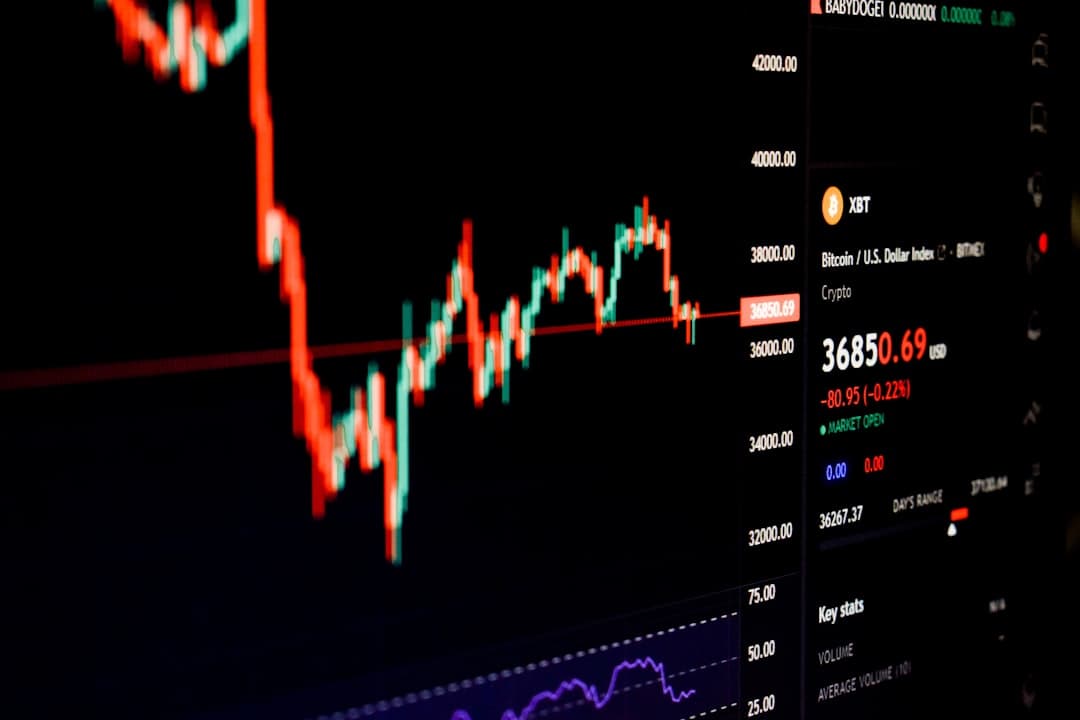
Complete Guide to Money Management in Forex Trading

Introduction
Many beginner traders focus entirely on finding the "perfect" trading strategy. They spend months analyzing charts, testing indicators, and studying price action. Yet they fail financially because of poor money management.
Here's the harsh reality: A trader with an average strategy but excellent money management will outperform a trader with an excellent strategy but poor money management. This guide reveals the professional techniques used by institutional traders to preserve capital and build sustainable wealth.
The Psychology of Money Management
Before discussing specific techniques, understand why money management matters psychologically.
The Impact of Losses on Your Account
Each loss has an increasingly severe impact on your account:
- Lose 10% of $10,000 = $1,000 loss, down to $9,000
- To recover to $10,000, you need an 11.1% gain
- Lose 50% of your account = $5,000 loss, down to $5,000
- To recover to $10,000, you need a 100% gain
This is why protecting capital is paramount. Large losses require enormous gains to recover from.
Avoiding Emotional Trading
Poor money management leads to emotional decisions:
- Over-leveraged positions create panic
- Revenge trading attempts to quickly recover losses
- Desperation leads to poor trade selection
Proper money management keeps positions sized appropriately, allowing rational decision-making.
Position Sizing: The Foundation
Position sizing determines how much you trade. It's the most critical money management decision.
The 1-2% Rule
The professional standard is risking 1-2% of your account per trade.
Formula:
Position Size = (Account Size × Risk %) / (Stop Loss in Pips × Pip Value)
Example:
- Account: $10,000
- Risk: 1% = $100
- Stop loss: 50 pips below entry
- Currency pair: EUR/USD (standard $10 per pip)
- Position size = $100 / (50 × $10) = 0.02 lots = 2,000 units
Why 1-2%?
- Sustainable: Even with 5 consecutive losses (rare), you lose only 5-10%
- Psychological: Small losses don't trigger emotional decisions
- Professional standard: Institutional traders use this approach
- Compounding: Over time, small consistent gains compound into substantial wealth
Calculating Pip Value
Pip value varies by currency pair and account currency:
For USD accounts:
- EUR/USD: $10 per pip (for standard 100k lot)
- GBP/USD: $10 per pip
- USD/JPY: $10 per pip (noting the different decimal places)
- AUD/USD: $10 per pip
For other account currencies, adjust based on the quote currency.
For mini/micro lots:
- Mini lot (10k units): Divide by 10
- Micro lot (1k units): Divide by 100
Risk-Reward Ratios
Risk-reward ratio compares how much you risk versus how much you stand to gain.
The 1:2 Ratio
A 1:2 ratio means you risk $100 to make $200.
Example: EUR/USD at 1.0850
- Entry: 1.0850
- Stop loss: 1.0800 (risking 50 pips)
- Target: 1.0950 (potential gain of 100 pips)
- Risk-reward: 1:2
Why 1:2 is Ideal
With a 1:2 ratio, you only need to be right 50% of the time to break even:
- Win $200 on winners
- Lose $100 on losers
- Win rate: 50%, Profit = (0.5 × $200) + (0.5 × -$100) = $100 - $50 = $50 profit
With a 1:1 ratio, you need a 50%+ win rate just to break even. The 1:2 ratio provides a margin of safety.
Identifying Good Risk-Reward Opportunities
Look for setups where:
- Support or resistance creates a natural stop loss
- The target is clearly defined at the next resistance or support
- Risk-reward is at least 1:2
A currency strength meter helps here—when trading the strongest currency against the weakest, the directional bias is stronger, making it easier to achieve good risk-reward ratios.
Position Sizing Adjustments
While the 1-2% rule is the baseline, professionals adjust based on conditions.
Increase to 2% When
- Trading with strong currency strength confirmation
- Clear support/resistance makes tight stops possible
- Your win rate has proven high (track this in a trading journal)
- Multiple confluences (support, moving average, pattern, currency strength)
Decrease to 0.5% When
- Trading new pairs you don't understand well
- In choppy, sideways markets with poor setups
- After a series of losses (psychological recovery)
- During major economic events with unpredictable outcomes
Never Exceed 2%
Risking more than 2% per trade is gambling, not trading. Even professional traders rarely exceed 2%.
The Kelly Criterion
The Kelly Criterion is a mathematical formula for optimal position sizing based on your win rate and risk-reward ratio.
The Formula
Kelly % = (Win Rate × Avg Win Size) - (Loss Rate × Avg Loss Size)
Example:
- Win rate: 55%
- Winning trades average: $200
- Losing trades average: $100
- Kelly % = (0.55 × $200) - (0.45 × $100) = $110 - $45 = $65
This suggests risking $65 per $1,000 account, or 6.5%. However, professionals use only 1/4 of the Kelly percentage for safety (called "fractional Kelly"):
- Fractional Kelly = 6.5% ÷ 4 = 1.625% ≈ 1.5-2%
This aligns perfectly with the standard 1-2% rule.
Account Drawdown Management
A drawdown is the decline from peak account value to trough.
Managing Drawdowns
Track your largest drawdown and aim to stay within 10-15% maximum:
- If your account hits a 15% drawdown, reduce position sizes to 0.5%
- Continue reduced sizing until you recover to previous highs
- Gradually return to normal position sizing
Example Drawdown Management
- Account: $10,000 (peak)
- After losing trades: $8,500 (15% drawdown)
- New position size: 0.5% = $42.50 per trade
- This conservative approach rebuilds confidence and capital
- Once back to $10,000+, return to 1-2% sizing
Stop Losses and Profit Targets
Proper placement of stops and targets is integral to money management.
Placing Stop Losses
Logical placement (not arbitrary):
- Just beyond support in an uptrend
- Just beyond resistance in a downtrend
- Just beyond significant swing points
- Beyond recent swing lows (uptrend) or highs (downtrend)
Never place a stop loss at a round number (1.0800). Support/resistance doesn't always align with round numbers.
Setting Profit Targets
Place targets at:
- Next swing high/low
- Next resistance/support level
- Based on your risk-reward ratio
- Key moving averages
Scaling Out
Some professionals scale out, closing half at 1:1 ratio and holding half for 1:3 or more:
- Close 50% at break-even +10 pips for psychological win
- Hold 50% for larger moves
- This locks in profit while maintaining upside
Account Sizing Strategy
Beyond per-trade position sizing, consider account management:
The Correlated Position Risk Limit
Never have more than 10-15% of your account risked at any given time across all open positions.
Example:
- Your account: $10,000
- Trade 1: Risk 2% = $200
- Trade 2: Risk 2% = $200
- Trade 3: Risk 2% = $200
- Trade 4: Risk 2% = $200
- Trade 5: Risk 2% = $200
- Total risk: 10%
This ensures one bad event doesn't wipe out your account.
Risk Across Correlated Pairs
If trading multiple correlated pairs (EUR/USD and EUR/GBP move together), account for combined risk:
- They might move in the same direction
- Use 1% per pair for correlated pairs
- Use 2% per pair for uncorrelated pairs
Leveraging Money Management with Currency Strength
A currency strength meter enhances money management by identifying highest-probability trades:
-
Strong trade setup (strong vs weak currency + strong technical confirmation)
- Risk: 2%
- Confidence: Can afford larger position
-
Moderate trade setup (only one confirmation)
- Risk: 1%
- Confidence: Standard sizing
-
Weak trade setup (marginal setup with mixed signals)
- Risk: 0.5%
- Confidence: Conservative sizing
Tracking Your Performance
Maintain a trading journal to:
- Track win/loss ratio
- Calculate average winning trade size
- Calculate average losing trade size
- Monitor maximum drawdown
- Refine position sizing based on data
Key metrics to track:
- Profit factor: (Total wins) / (Total losses)
- Win rate: (Winning trades) / (Total trades)
- Expectancy: (Win rate × Avg win) - (Loss rate × Avg loss)
Common Money Management Mistakes
- Risking too much per trade: Over 2% is gambling
- No stop loss: Risking unlimited amounts
- Moving stop losses: Eliminates risk management
- Revenge trading: Increasing size after losses
- Ignoring correlation: Not accounting for pairs moving together
- No profit targets: No exit plan on the upside
- Chasing losses: Trading just to recover, not for opportunity
Conclusion
Money management separates professional traders from gamblers. Implement the 1-2% rule, maintain 1:2 risk-reward ratios, and use a currency strength meter to identify high-probability trades where you can afford larger position sizes. Track your performance in a trading journal and continuously refine your approach.
Remember: Your primary goal isn't to make money on every trade—it's to survive long enough to compound small consistent profits into substantial wealth. Money management makes this possible.
Partner Offer
Open an Exness Account
Start trading with Exness through our partner link. Click the button below to open the account page with the best experience for your device.