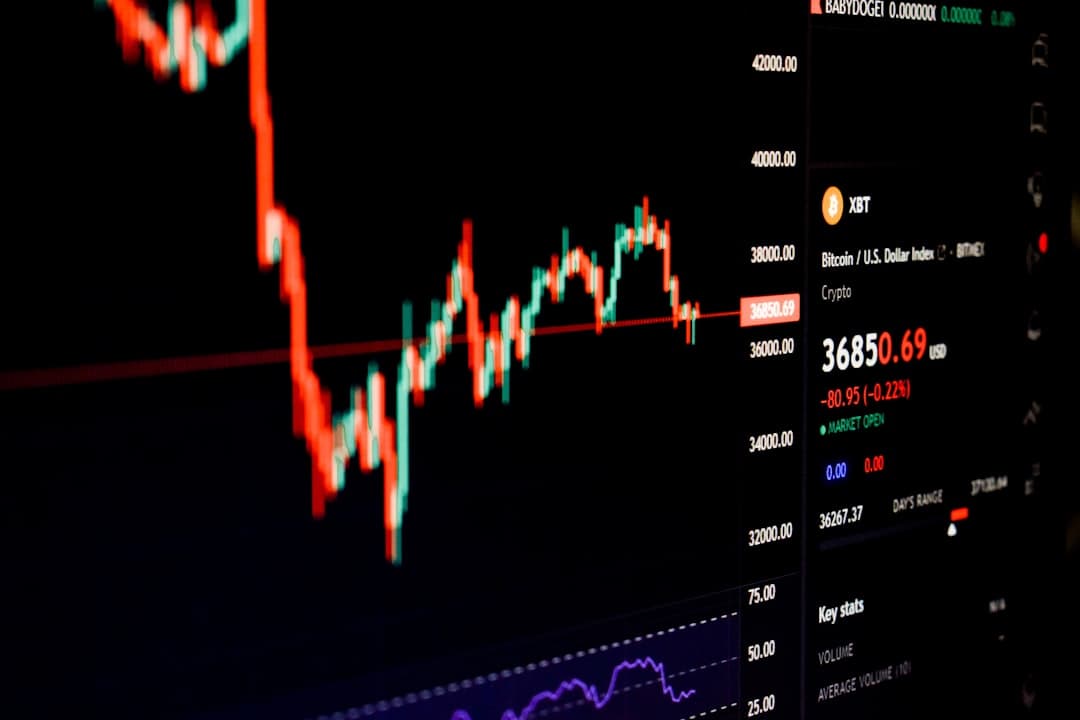
Forex Trading for Beginners: A Complete Step-by-Step Guide
Introduction to Forex Trading
The foreign exchange market, commonly known as forex or FX, is the world's largest financial market, with over $6 trillion in daily trading volume. Unlike stock markets that trade during specific hours, forex operates 24 hours a day, 5 days a week across major financial centers: Tokyo, London, Frankfurt, and New York.
For beginners, forex trading represents both an opportunity and a challenge. The high liquidity and leverage available make it attractive, but the same characteristics can lead to rapid losses if you're not careful. This guide will equip you with the foundational knowledge you need to trade responsibly.
What Is Forex Trading?
Forex trading is the process of exchanging one currency for another. When you trade forex, you're essentially speculating on the value of one currency rising or falling relative to another currency.
For example, if you believe the British Pound will strengthen against the U.S. Dollar, you would buy the GBP/USD pair. The first currency listed (GBP) is called the "base currency," and the second currency (USD) is the "quote currency." If the exchange rate rises from 1.2500 to 1.2600, you've made a profit.
The Forex Market Structure
The forex market operates on a decentralized basis through a network of banks, brokers, and traders worldwide. Unlike stock exchanges, there's no central physical location—trades occur electronically over-the-counter (OTC). This decentralized nature means:
- 24-hour trading: You can trade virtually anytime
- High liquidity: Currencies are highly liquid, meaning you can enter and exit positions easily
- Tight spreads: The difference between buy and sell prices is usually small
- Leverage availability: Brokers offer leverage, allowing you to control large positions with small capital
Understanding Currency Pairs
All forex trades involve currency pairs. The most commonly traded pairs are called "majors," which feature the U.S. Dollar paired with other major currencies:
- EUR/USD (Euro/U.S. Dollar) - Most traded pair
- GBP/USD (British Pound/U.S. Dollar)
- USD/JPY (U.S. Dollar/Japanese Yen)
- USD/CHF (U.S. Dollar/Swiss Franc)
- AUD/USD (Australian Dollar/U.S. Dollar)
- USD/CAD (U.S. Dollar/Canadian Dollar)
Major pairs have tight spreads and high liquidity, making them ideal for beginners.
Minor pairs (or crosses) don't include the U.S. Dollar:
- EUR/GBP
- EUR/JPY
- GBP/JPY
Exotic pairs include one major currency and one from an emerging market:
- USD/TRY (U.S. Dollar/Turkish Lira)
- GBP/SGD (British Pound/Singapore Dollar)
As a beginner, focus on major pairs until you gain experience.
How Forex Quotes Work
Forex quotes show the exchange rate between two currencies. For example, EUR/USD = 1.0800 means one Euro equals 1.0800 U.S. Dollars.
Pips and Pipettes
A pip (percentage in point) is the smallest standard unit of price change. For most currency pairs, one pip equals 0.0001. For example:
- EUR/USD moves from 1.0800 to 1.0801 = 1 pip movement
For pairs involving the Japanese Yen, one pip equals 0.01 (because the Yen doesn't have decimal places like other currencies).
A pipette (or fractional pip) is one-tenth of a pip, or 0.00001 for most pairs. Modern platforms display prices to five decimal places, allowing traders to count fractional pips.
Understanding Spreads
The spread is the difference between the bid price (what you can sell at) and the ask price (what you can buy at).
For example:
- EUR/USD bid: 1.0800
- EUR/USD ask: 1.0802
- Spread: 2 pips
This means when you enter a trade, you're immediately "down" by the spread amount. Lower spreads are preferable—major pairs typically have spreads of 1-3 pips during active trading hours.
Getting Started: The Basics
Step 1: Choose a Regulated Broker
Your first decision is selecting a forex broker. Look for:
- Regulation: Ensure they're regulated by CFTC (USA), FCA (UK), ASIC (Australia), or similar
- Reputation: Check reviews and regulatory action history
- Spreads: Compare bid-ask spreads across brokers
- Trading platforms: Most offer MetaTrader 4/5 or proprietary platforms
- Minimum deposit: Some allow you to start with $100, others require more
- Customer support: Ensure they offer support in your language during your trading hours
Step 2: Open a Practice Account
Most brokers offer demo accounts with virtual money. Use this to:
- Learn the trading platform
- Test your strategy without real money at risk
- Build confidence
- Understand how to place, modify, and close trades
Spend at least 2-4 weeks practicing before trading with real money.
Step 3: Start Small
When you begin trading real money:
- Start with a micro account (smallest lot size)
- Risk only what you can afford to lose
- Never risk more than 1-2% of your account per trade
Basic Forex Trading Strategies
1. Trend Following
This is the simplest strategy for beginners. Identify whether a currency pair is in an uptrend or downtrend, then trade in that direction:
- Uptrend: Buy during pullbacks
- Downtrend: Sell during rallies
Use tools like moving averages to identify trends. For example, when the price is above the 50-period and 200-period moving averages, you're in an uptrend.
2. Support and Resistance Trading
Prices often bounce off certain levels (support) where buyers step in, and resistance where sellers emerge. Buy near support and sell near resistance.
3. Breakout Trading
Wait for price to consolidate, then trade the breakout in the direction of momentum. Breakouts often lead to large moves.
4. Using a Currency Strength Meter
A currency strength meter is invaluable for beginners. Instead of analyzing individual pairs, it shows which currencies are strong and which are weak. You can then trade the strongest currency against the weakest:
- Strong GBP + Weak EUR = Trade GBP/EUR
- Strong AUD + Weak JPY = Trade AUD/JPY
This approach eliminates guesswork and focuses your efforts on high-probability trades.
Essential Risk Management Rules
Risk management separates successful traders from those who blow up their accounts.
Rule 1: Use Stop Losses
Every trade must have a stop loss—a price level where you exit if wrong. Never adjust your stop loss to give a losing trade more room. Always define your risk before entering a trade.
Rule 2: Risk-Reward Ratio
A good risk-reward ratio is at least 1:2, meaning for every $100 you risk, you should aim to make at least $200. This means even if you win only 50% of your trades, you'll be profitable.
Rule 3: Position Sizing
Calculate your position size based on your account size and risk tolerance:
Position Size = (Account Size × Risk %) / (Stop Loss Distance in Pips × Pip Value)
For example:
- Account: $10,000
- Risk: 1% = $100
- Stop loss distance: 50 pips
- EUR/USD pip value: $10
Position size = $100 / (50 × $10) = 0.02 lots (2,000 units)
Rule 4: Never Over-leverage
While brokers may offer 500:1 leverage, using it is extremely risky. Start with 10:1 or lower until you gain experience.
Common Beginner Mistakes to Avoid
- Trading without a plan: Never enter a trade without knowing your entry, exit, and stop loss
- Over-trading: More trades don't mean more profit. Quality over quantity
- Ignoring risk management: This is the #1 reason beginners lose money
- Chasing losses: Never try to quickly recover losses by increasing position size
- Trading illiquid pairs: Stick with majors that have tight spreads
- Trading during economic news: High volatility can stop you out with whipsaw moves
- Using excessive leverage: It amplifies losses as easily as profits
- Not using demo practice: Jump to real money too quickly before understanding the platform
Recommended Learning Resources
To deepen your knowledge:
- Study price action and technical analysis
- Learn fundamental analysis (economic indicators, central bank decisions)
- Test strategies on a demo account
- Review trades in a trading journal
- Follow the economic calendar for upcoming events
- Start connecting currency strength analysis with your trades
Conclusion
Forex trading for beginners is achievable, but it requires patience, discipline, and proper education. Start with a regulated broker, practice on a demo account, learn basic strategies, and most importantly, apply strict risk management. Use tools like a currency strength meter to identify high-probability opportunities. Remember: the goal isn't to make money on every trade—it's to be profitable over time through consistent, disciplined trading.
The forex market rewards preparation and punishes carelessness. Take your time learning, start small, and gradually build your skills and account size.
Partner Offer
Open an Exness Account
Start trading with Exness through our partner link. Click the button below to open the account page with the best experience for your device.